
What is thermofoil? Thermofoil and PVC film explained
Thermofoil is the name used in North America for PVC film that is heated and vacuum pressed onto MDF. If you are buying thermofoil for cabinet doors, you are buying PVC membrane foil, the film we make in Foshan.
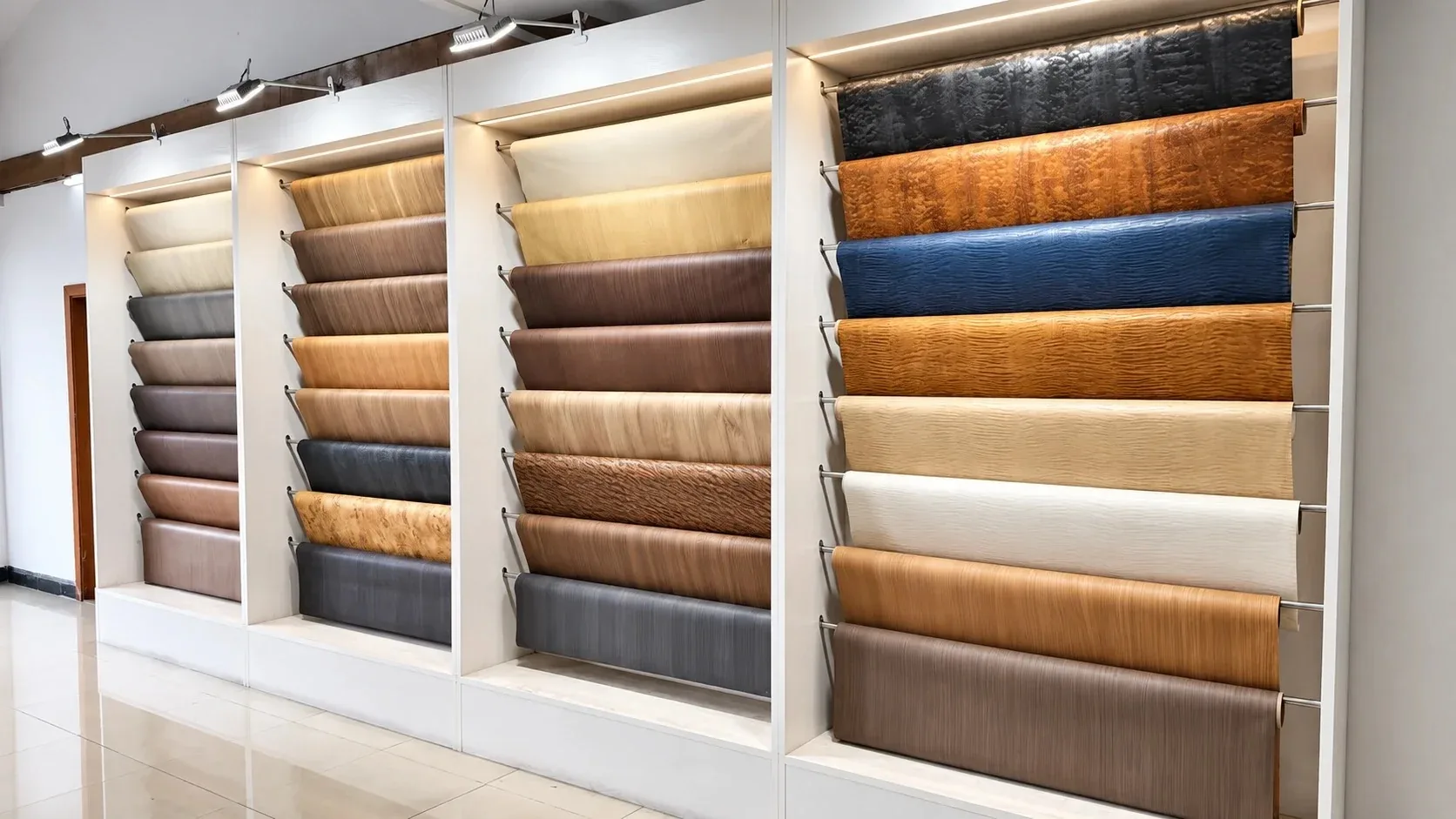
One product, many names
Buyers in different markets use different words for the same film. They all mean decorative PVC film that is vacuum pressed onto shaped MDF parts.
| North America | Thermofoil, rigid thermofoil (RTF) |
|---|---|
| Europe and Asia | PVC membrane foil, membrane press foil, vacuum press film |
| Spanish-speaking markets | PVC para termoformado |
| The finished doors | Thermofoil doors, membrane doors |
How thermofoil doors are made
Thermofoil doors are made by vacuum membrane pressing. The MDF parts are routed, sanded and sprayed with adhesive. The film is laid over them, heated in the press and drawn down by vacuum, so it covers the face, the edges and the routed profile in one step.
It is the usual process for kitchen cabinet doors, wardrobe doors and shaped furniture fronts. For flat panels and mouldings there are other processes: vacuum membrane pressing, flat lamination and profile wrapping compared →
Xingpai makes the film only. We supply thermofoil in rolls. Our customers press the doors on their own vacuum membrane presses. We don't make doors, offer pressing as a service or sell machines.
Why thermofoil is PVC
PVC softens when it is heated and stretches without tearing, so it can follow grooves, raised panels and rounded edges. This is why most vacuum pressing lines use PVC film. We also make PET and PP film for this process; how PVC and PET compare →
Pros and cons of thermofoil doors
Good points
- The face and edges of a routed door are covered in one piece, so there is no seam.
- The film is printed, so every door in an order looks the same.
- Many looks: wood grain, solid colors, stone and marble, fabric and leather textures, high gloss and soft touch.
- The film does not absorb water and wipes clean.
- One pressing step after routing.
- Usually costs less than painted or solid wood doors.
Watch out for
- Long, direct heat, for example next to ovens and cooktops. Fit heat shields there.
- Repair: a damaged door is hard to repair and is usually replaced.
- Wear depends on the film. For doors used every day, choose a scratch-resistant series.
- For plain flat panels, melamine board usually costs less.
For a full comparison with painted MDF, solid wood and melamine, see which finish for cabinet doors and furniture →
How to choose thermofoil film
- The look. Pick a finish: wood grain, solid-color soft-touch, stone and marble, fabric and leather texture, special effect or high gloss. Every series can be used for vacuum membrane pressing.
- Wear. Every color in the PTBS, PTS and PNT (wood grain), NS and PNX (solid-color soft-touch) and PYM (metallic wood grain) series is scratch-resistant. Our high gloss film also has scratch-resistant options. Scratch-resistant film →
- Thickness. Our films range from 0.10 to 1.5 mm, depending on the series. The right thickness depends on your press, the depth of the profile and the finish. Send us a photo or drawing of the door and we will recommend one.
- A color you already use. Send us your sample and we will match the color and texture.
Our thermofoil at a glance
| Material | PVC film (PET and PP film also available) |
|---|---|
| Thickness | 0.10–1.5 mm, depending on the series |
| Width | 1240–1420 mm |
| Minimum order | 3,000 m per color for 0.10–0.24 mm, 2,000 m per color for 0.25–1.5 mm |
| Payment | 30% deposit, balance by T/T |
Full details of our film for vacuum membrane pressing →
Questions
Is thermofoil the same as PVC film?
Yes. Thermofoil is the North American name for PVC film that is heated and vacuum pressed onto MDF. In Europe and Asia it is usually called PVC membrane foil or membrane press foil.
Is thermofoil the same as melamine?
No. Melamine board is a ready-made board with a printed paper face, used for flat panels. Thermofoil is a film that is pressed onto routed MDF parts, so it can cover shaped doors and their edges. Xingpai does not make melamine boards; we make the film.
Does thermofoil absorb water?
No. The film does not absorb water and wipes clean, and on pressed doors the face and edges are one piece.
Can thermofoil doors be used next to an oven?
Avoid long, direct heat. Next to ovens and cooktops, fit heat shields or use another material for that part.
Do you sell thermofoil doors?
No. We make the film and supply it in rolls. Our customers press the doors on their own vacuum membrane presses.
What is your minimum order?
3,000 m per color for 0.10–0.24 mm, 2,000 m per color for 0.25–1.5 mm.
Buying thermofoil for your doors?
Tell us your press type, the colors you like and the quantity. A sales manager will reply with a recommendation and price.